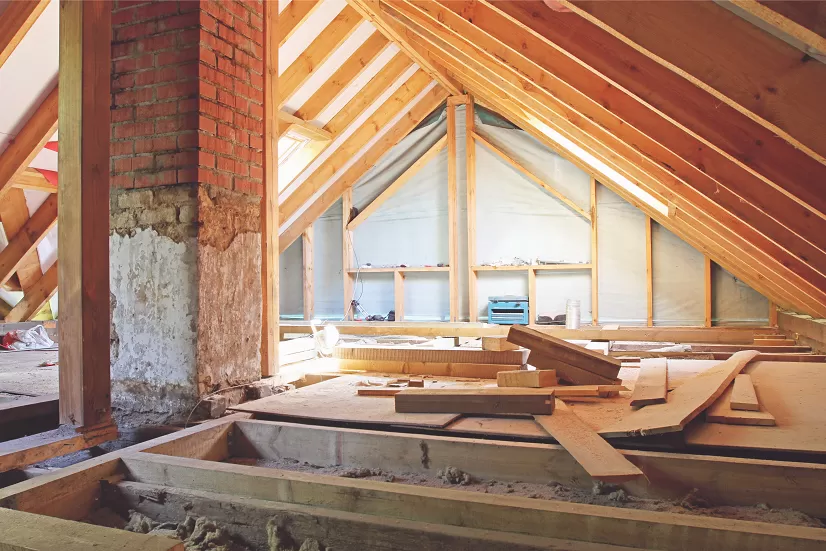

Oakville homeowners tend to invest in their houses. Kitchens get redone, basements get finished, windows get replaced. The attic is the space that gets skipped, because nobody sees it. It is also the space with the most say over how warm the second floor feels in January.
This guide sorts winter comfort upgrades by what they cost, so you can start wherever your budget allows.
Free: things you can do this afternoon
- Look in the attic. From the hatch, check whether the insulation covers the joists and looks even. Here is how to tell if your Oakville attic needs more insulation before winter.
- Clear your registers. Sofas, rugs and curtains over a vent block the heat you are already paying for.
- Use the sun. Open south-facing blinds during the day and close everything at dusk.
- Check bathroom fans. Make sure they vent outdoors and not into the attic, where the moisture ends up in your insulation.
Low cost: a weekend and a trip to the hardware store
- Weatherstrip doors and the attic hatch. A leaky hatch is a hole in your ceiling.
- Caulk window and door trim.
- Add door sweeps to exterior doors.
Natural Resources Canada’s guide to insulation and weatherstripping materials explains which product suits which gap.
Mid-range: the attic, done properly
This is where the larger comfort gains are. A proper attic upgrade has three parts.
Air sealing. Natural Resources Canada’s Roofs and attics guide says air leaks at chimneys, vents, pipes and electrical boxes can account for substantial heat loss and lead to moisture problems.
Ventilation. A well-insulated attic runs colder, so any moisture that reaches it has to be vented. Baffles keep the soffit vents open. Our post on the moisture problem most homeowners never see explains what happens when this step is missed.
Insulation. Our attic insulation service in Oakville uses blown-in cellulose or fibreglass. If the existing material is damp or mouldy, removal comes first. See attic mould and insulation removal in Oakville.
For the bigger picture, read the one room in your Oakville home you probably have not renovated.
Larger projects: beyond the attic
Natural Resources Canada notes that basements and uninsulated walls can lose more heat than a typical attic. If the attic is already in good shape, look here next:
- Rim joists and basements: spray foam insulation.
- Older and heritage homes: see insulating older and heritage homes without wrecking them.
- Empty wall cavities: drill and fill insulation.
- Rooms over the garage: garage ceiling insulation.
- Whole-house air leakage: AeroBarrier.
What kind of return to expect
The U.S. EPA estimates that air sealing and insulating attics, crawl space floors and basements saves an average of 15% on heating and cooling costs (ENERGY STAR). That is modelled on typical U.S. homes and is not a promise for yours.
Do not leave rebate money behind
Rebate programs have conditions, and missing one can cost you the payment. Read how not to lose your insulation rebate on a technicality and see our energy rebate page.
Start where it makes sense for you
If you would like someone to look at the attic and tell you which tier you are in, contact us for an estimate.